Parts of European and Faux Double Hung Windows



Constant street traffic, barking dogs, and nearby construction can turn a home into a stress zone fast. Most standard window units fail at sound control simply because thin glass panes and frame gaps let sound vibration pass right inside. Hawkeye Windows & Doors provides custom soundproof windows that catch those noise waves before they reach your living space. By combining dense soundproof glass setups with tight rubber weather seals, our soundproof windows cut outdoor noise to a fraction of its original volume. Here is a clear breakdown of how modern soundproof window engineering keeps your rooms quiet.
Noise moves in air waves. When those waves hit a standard single pane of glass, they make the pane vibrate. That vibration then acts like a speaker cone, sending sound straight into your room. Thin glass simply lacks the weight to resist vibration.
Stopping sound waves comes down to a simple balance of physical mass and disrupted airspace. Thick barrier materials soak up sound energy, while deep air cavities between the panes dampen the strength of vibrations. Conventional dual-pane glass keeps rooms warm in winter, but because both glass sheets share the exact same thickness, they vibrate at matching frequencies and let urban noise pass right through.
We work around this issue at Hawkeye by combining offset glass thicknesses with wider internal air cavities. Spacing out panes of different weight scrambles sound vibrations, so noise bleeds off most of its energy prior to entering the home.
What goes into the glass unit dictates real-world acoustic performance. While basic clear panes bounce off sharp, high-pitched noise to a degree, blocking low-pitched street rumbles calls for laminated glass built with noise-dampening resin layers.
In acoustic laminated glass, a pair of individual glass panes sandwich a thin, flexible PVB resin sheet. Acting much like a built-in shock absorber, this resin core absorbs incoming acoustic energy the moment sound strikes the exterior pane. That stops vibrations from leaping across to the interior room side, deadening low-pitched traffic noises such as heavy truck engines and sirens.
Varying the thickness across the glass package creates an extra hurdle for sound waves. For instance, putting a 6mm exterior pane together with a 4mm interior pane prevents both sides from vibrating at the same frequency, causing incoming noise to lose power before it reaches your living room.
Where noise pollution is extreme—like homes near highway intersections or airport flight paths—triple-pane acoustic units introduce extra resin layers alongside wider gas cavities to deliver top-tier sound dampening alongside strong thermal control.

Even top-tier soundproof glass cannot quiet a room if air leaks around the sash edges. Sound behaves like water, sneaking through tiny frame gaps and installation cracks with ease.
Hawkeye soundproof framing profiles use high-density uPVC, solid timber cores, or heavy-gauge insulated aluminum. That added material mass stops noise from traveling directly through the window frame itself.
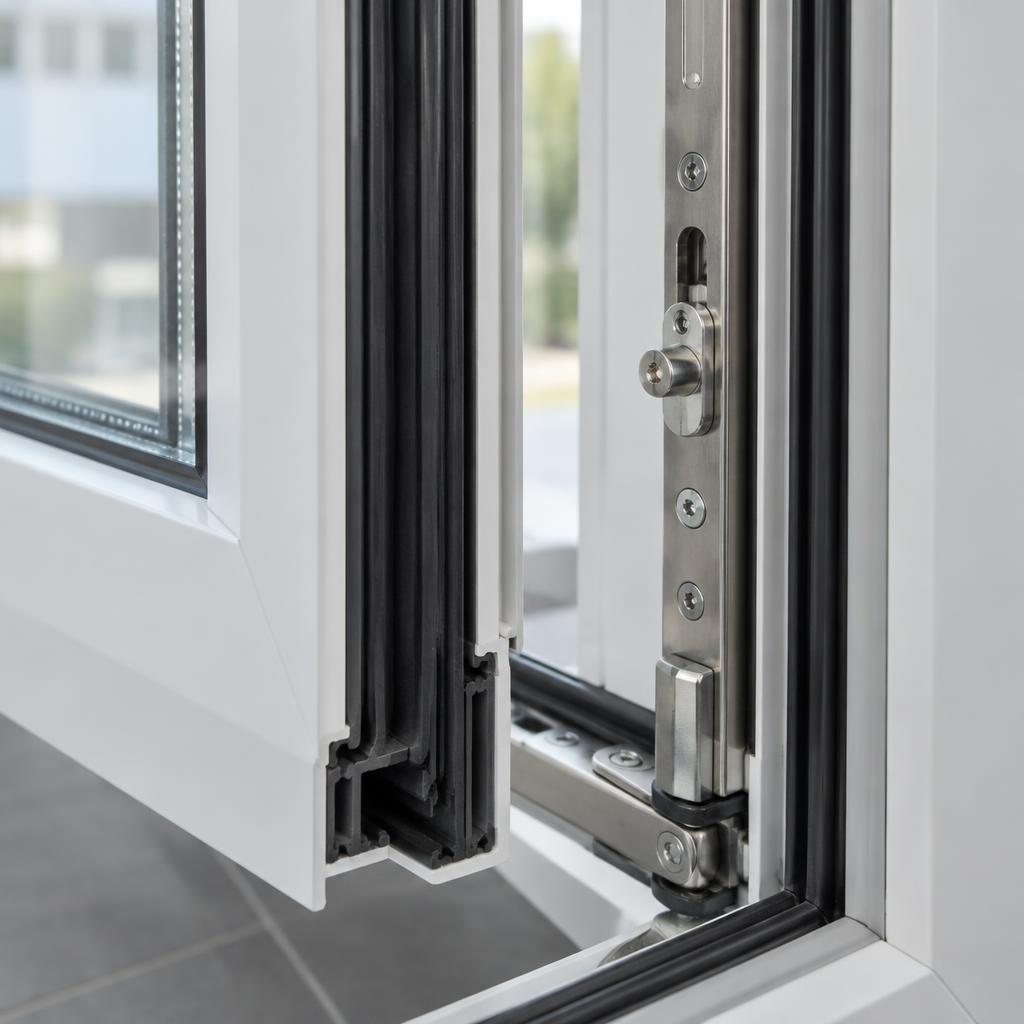
Along the sash perimeter, continuous EPDM rubber gaskets flatten under locking pressure. Instead of relying on light foam strips, our multi-lip rubber seals form tight compression barriers that eliminate draft gaps where noise typically sneaks past.
The way our tilt-and-turn hardware operates helps keep rooms noticeably quieter. Turning the handle drives multiple steel locking points into frame keepers all around the perimeter, drawing the sash firm against its rubber seals to shut out outdoor city noise immediately.
When reviewing soundproof window options, you will run across STC ratings. STC stands for Sound Transmission Class, a simple scale measuring how effectively a window blocks sound. Higher numbers mean better noise control.
Single-pane windows usually land around STC 26, which leaves outdoor speech clearly audible indoors. Standard double-pane windows achieve STC 28 to 30—enough for light suburban noise, but insufficient for loud streets.
Hawkeye soundproof window packages achieve STC ratings from 38 up to 48+, depending on your chosen glass buildup. Moving from STC 28 to STC 38 cuts perceived noise levels roughly in half, turning harsh traffic roar into a quiet background hum.
| Window Configuration | Typical STC Rating | Noise Reduction Performance |
|---|---|---|
| Single-pane glass | 25–28 | Limited noise reduction |
| Standard double-pane glass | 28–32 | Moderate noise reduction |
| Soundproof laminated double-pane | 35–40+ | Improved noise control |
| Specialized Soundproof window systems | 38–48+ | High noise reduction |
Every quiet-space project starts with a close look at local noise sources around the building site:
Suburban homes dealing with moderate street activity or nearby neighborhood chatter generally find full relief using asymmetrical dual-pane glass made with one laminated sheet. This combination holds down overall frame bulk and cost while filtering out ambient daily noise.
Heavy triple-pane soundproof windows serve properties built along freight tracks, flight lanes, or multi-lane avenues. Their thicker frame profiles accommodate wider air spaces and multiple acoustic foils tailored specifically for harsh low-frequency rumbles.
Proper job-site sealing is just as critical as the window frame itself. Our installers pack perimeter wall gaps with dense acoustic foam and apply elastomeric air barriers so noise cannot bypass the assembly through hidden wall hollows.
It can make a real difference, particularly if your current windows have thin glass or worn-out seals. For homes facing busy roads, we would look at the glass thickness, the space between panes, and how tightly the window closes before recommending a replacement.
If outside noise is one of your main concerns, laminated glass is worth considering. The special layer between the glass sheets helps control vibration. It is particularly useful when dealing with traffic noise and other sounds that are difficult to manage with ordinary glazing.
It depends on the glass specification. Three panes do not automatically mean less noise. A double-glazed unit with different glass thicknesses and an acoustic laminate may be a better choice than conventional triple glazing. The right option should be based on the noise around your property.
STC is a rating used to compare how well building materials and assemblies reduce airborne sound. A higher number means better sound insulation under the conditions measured. When comparing windows, check the rating of the complete window assembly rather than relying on the glass specification alone.
Low-frequency sounds, such as those produced by trucks and buses, can be harder to keep out than everyday conversation. This is where the choice of glass becomes particularly important. Soundproof laminated glass and an appropriate air gap can help reduce the amount of noise entering the room.
Yes. Glass is only one part of the window. Poorly fitted frames, worn gaskets, or small gaps around the installation can all let sound through. This is why we consider the frame, locking system, seals, and installation together when specifying an acoustic window.
Stopping intrusive street noise demands heavy-duty frame profiles, laminated glass technology, and airtight perimeter seals. Hawkeye Windows & Doors builds custom soundproof window setups tailored to your building’s noise environment and design goals.
Contact our technical team to explore STC performance levels, glass configurations, and custom frame options for your property.


