Low-Iron Glass
When you’re importing high-end European windows for a custom US project, the conversation usually starts with thermal breaks and U-factors. But there’s a hidden technicality that can quietly undermine your entire design once the scaffolding comes down: the iron content in your glass.
At Hawkeye Windows and Doors, we’ve seen homeowners invest six figures in fenestration only to realize their “clear” views look like they’re filtered through a swamp. This guide breaks down why low-iron glass isn’t just an upgrade—it’s the only way to protect your architectural integrity.
What Exactly is Low-Iron Glass?
Standard glass is a bit of a misnomer. To keep production costs down, traditional float glass uses iron oxide as a stabilizer. This leaves behind what we call the “iron fingerprint”—that heavy green tint you see on the edge of a table or a thick window pane.
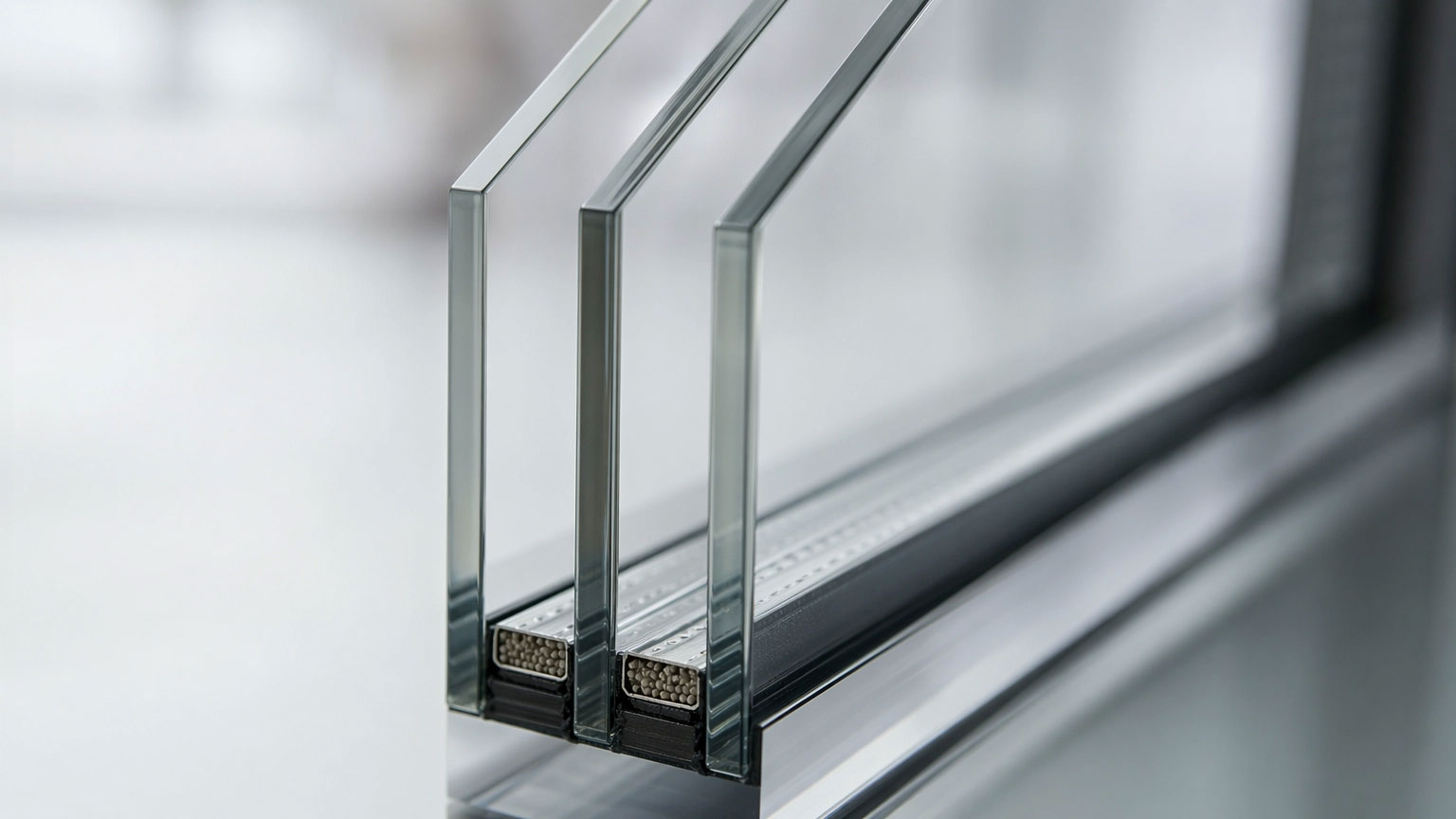
In the high-performance triple-pane windows we bring over from Europe, you aren’t just looking through one pane; you’re looking through three. This triples the iron distortion. Low-iron glass (marketed as ultra-clear) swaps out standard sand for high-purity silica. By stripping away 90% of the iron, we effectively remove the “filter” between your living room and the landscape.
 The Specs: Standard vs. Low-Iron Glass
 The Specs: Standard vs. Low-Iron Glass
| Performance Metric | Standard Float | Low-Iron (Ultra-Clear) | Real-World Result |
|---|---|---|---|
| Iron Concentration | ~0.1% (High) | Under 0.01% | Eliminates the “aquarium” green hue. |
| Visible Light (VLT) | 70% – 82% | 82% – 91%+ | Massive boost in natural daylighting. |
| Color Rendering (CRI) | Noticeable Shift | True-to-Life | White walls and marble stay white. |
| Solar Gain (SHGC) | Reduced | Optimized | Harvests more free heat in winter. |
The “Green Shift”: A Designer’s Nightmare
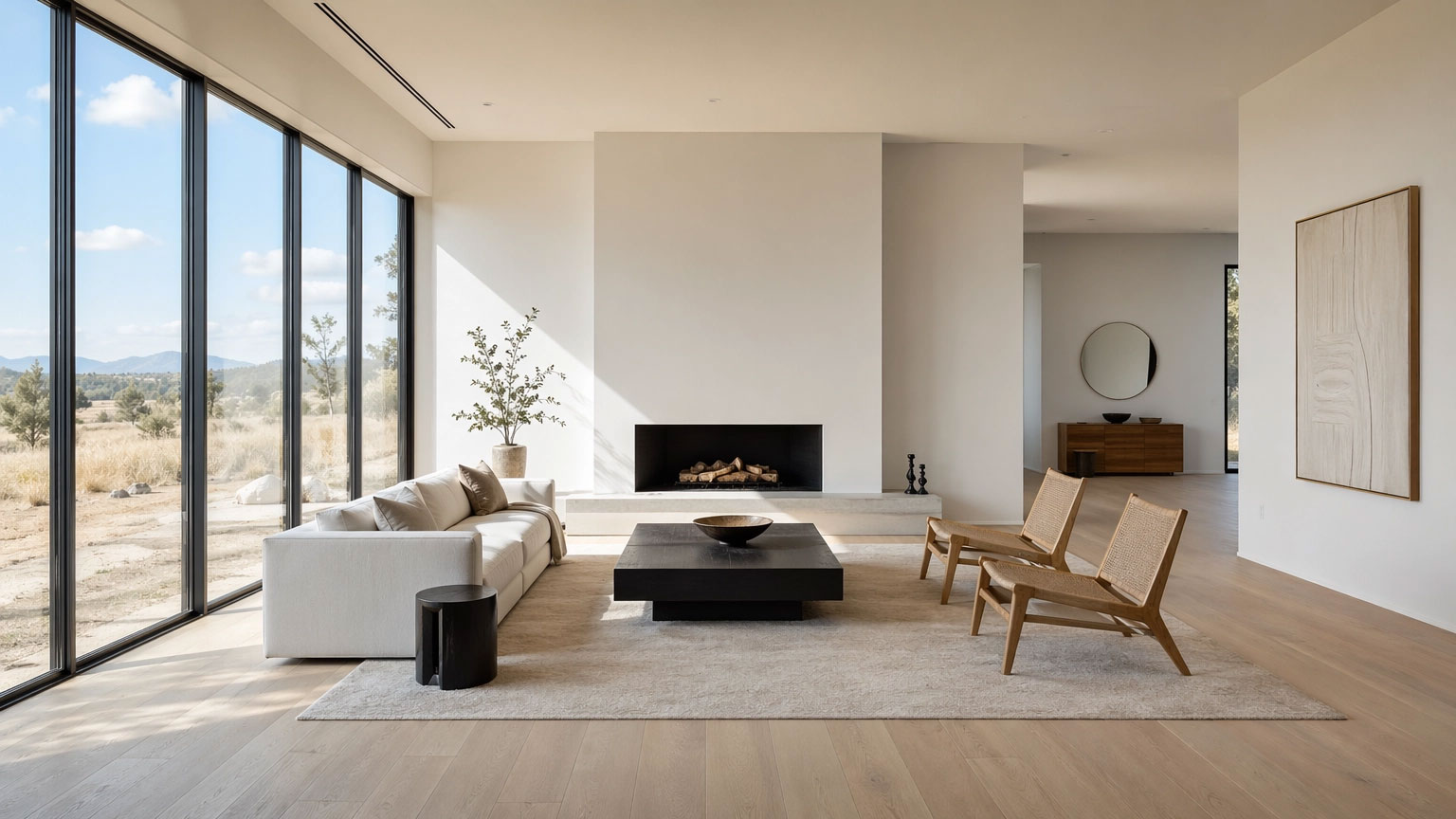
Minimalism is unforgiving. If you’ve specified “Museum White” walls or light oak flooring, standard glass will fight you. It colors the natural light, casting a muddy, greenish shadow across the interior. This is a deal-breaker for:
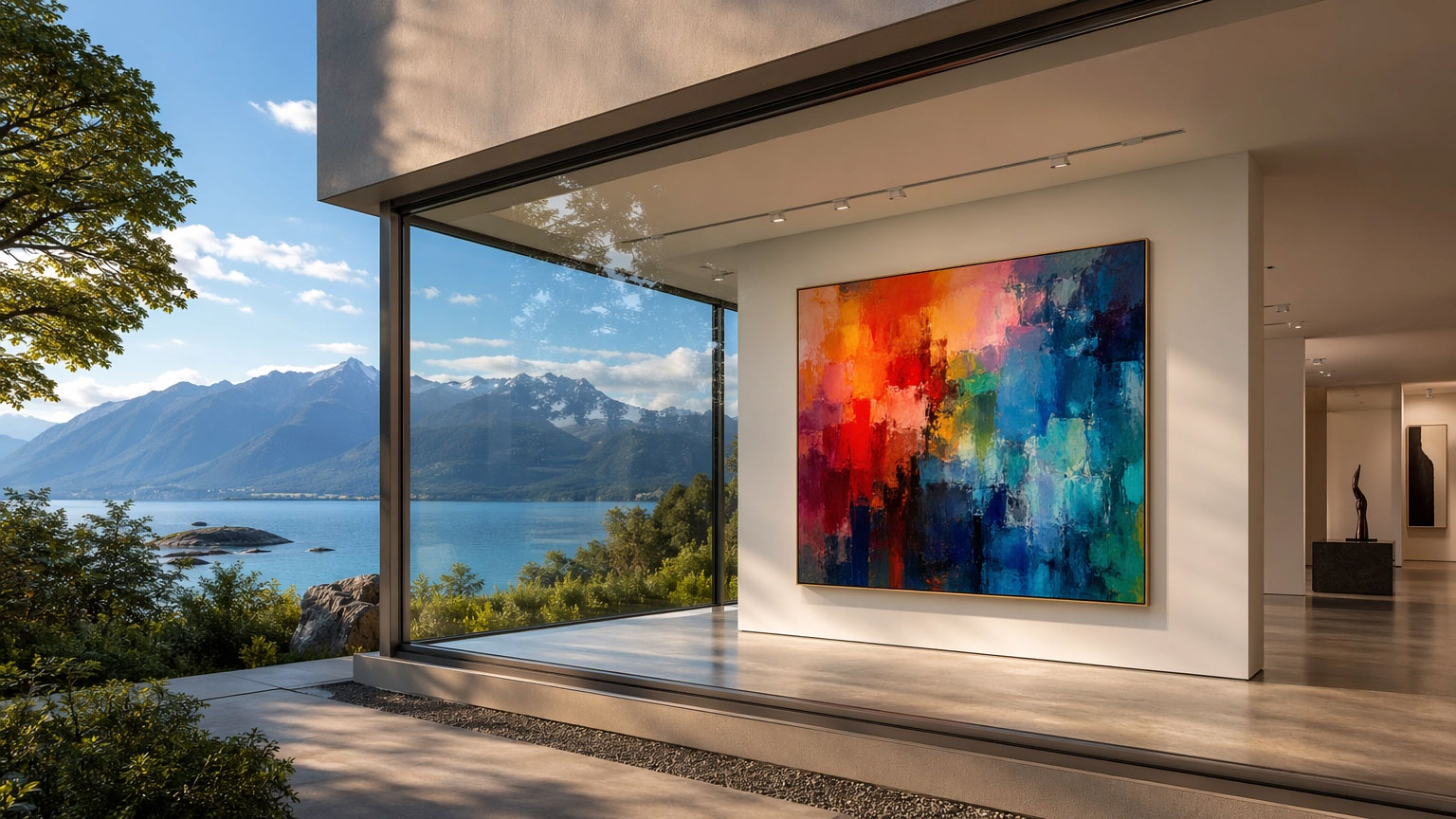
- Art Gallery Spaces: You can’t appreciate a painting if the glass is “re-painting” it green.
- Zero-Threshold Transitions: It ruins the flow in a modern glass wall system.
- High-End Stone: Marble and quartz lose their crispness under the weight of standard glazing.
By opting for low-iron glass, you’re ensuring that the palette you spent months perfecting is exactly what you see when the sun hits the room.
The Science: Light Transmittance and Heat
It’s not just about looks; it’s about physics. Low-iron glass moves the needle on two critical performance fronts:
1. Boosting VLT (Visible Light Transmittance)
VLT measures how much “usable” light makes it through the pane. While standard double-pane glass can feel a bit dim (around 70% VLT), low-iron units push that over 80%. It’s a difference you can feel—the room feels “lighter” even without turning on a single lamp.
2. Maximizing Passive Solar Gain
For our clients in cold climates, think New England or the Rockies, low-iron glass is a functional asset. It allows more short-wave infrared energy to pass through. Paired with our European Low-E glass coatings, this acts like a natural radiator, helping heat the home’s thermal mass for free during winter months.
Why Hawkeye Recommends Low-Iron for European Imports
Europe’s Passive House standards have pushed glass tech further than most domestic US products. But here’s the catch: the more efficient the window (the more layers of glass), the more iron you’re looking through. This is why we treat low-iron glass as a near-mandatory spec for any triple-glazed project. We source our glass from top-tier European processors who guarantee an optical purity that mass-produced domestic glass simply can’t touch.
The Strategy: Where to Spend vs. Where to Save
Let’s be realistic, budgets exist. You don’t need low-iron everywhere. Here is how we advise our clients:
- Living & Dining Areas: Non-negotiable. Use low-iron here.
- Minimalist Interiors: If the walls are white, the glass must be low-iron.
- Utility Zones: Save your money. Use standard glass for the garage or the frosted glass in the mudroom.
- The Tripan Rule: For triple-pane, try to spec low-iron for at least two of the layers to keep that light transmittance high.
FAQ: What You Actually Need to Know
Is the price jump for low-iron glass significant?
There is a premium because the raw materials (pure silica) are harder to source. But in the context of a total luxury build, the upgrade is a small fraction of the cost with a massive, daily visual payoff.
Is it more fragile?
Definitely not. It’s the same glass, just purer. We temper and laminate it to meet every US safety and impact code, exactly like standard glass.
What about UV protection?
Iron content doesn’t stop UV rays, coatings do. Our low-iron units use the same advanced coatings to keep your furniture from fading while giving you better clarity.
Does it improve my U-factor?
The U-factor (insulation) stays the same because that’s handled by the argon gas and coatings. What you’re gaining is light and color accuracy, not just R-value.
Iron Glass: Clarity is the Ultimate Luxury
Your windows are the “eyes” of the house. Don’t let a few bucks in iron content tint your view for the next thirty years. Specifying low-iron glass with Hawkeye Windows and Doors ensures that your home feels as open and bright as the architect intended.
Want to see a side-by-side comparison? Contact the Hawkeye team today for a consultation and let’s get your project spec’d for total clarity.